


HomeBeet pulp
Beet pulp
Beet pulp
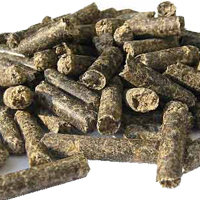
The industrial processing of beet consists essentially of extracting a sugar juice that will become sugar or alcohol. A co-product called "Beet pulp" is then obtained.
The wet pulp at the end of manufacture is pressed in order to extract some of the water it contains.
Properties:
- Strong digestibility.
- High energy value.
- Secure food: energy in the form of cellulose, hemicelluloses and pectins, without starch.
- Very appetizing.
- Positive effect on dairy production and butyrous rate.
| Nutriments | Pulpe de betterave | Unité |
|---|---|---|
| HUMIDITY | 10,9 | % |
| Dry matter | 89,1 | % |
| Protein | 8,1 | % |
| Mineral Matter | 6,8 | % |
| Starch | 6,6 | % |
| Sugar | 12,6 | % |
| Fat | 42,6 | % |
| Cellulose | 0,91 | % |
| UFL | 0,89 | UF |
| UFV | 307 | UF |
| PDIN | 37 | Gr/Kg |
| PERS | 42 | Gr/Kg |
| PDIA | 13,3 | Gr/Kg |
| LYSINE | 1,67 | Gr/Kg |
| THREONINE | 1,1 | Gr/Kg |
| METHIONINE | 0,78 | Gr/Kg |
| LINOLEIC ACID | 12 | Gr/Kg |
| CALCIUM | 0,8 | Gr/Kg |
| TOTAL PHOSPHORUS | 1,8 | Gr/Kg |
| POTASSIUM | 1,2 | Gr/Kg |
| SODIUM | 60 | Gr/Kg |
| CHLORINE | 207 | Gr/Kg |
| EM Chicken | 805 | KCal |
| PHOSPHORE AVAILABLE | 955 | Gr/Kg |